Genetics – Something I Learnt – Thursday 7th March 2024
Genetics – Something I Learnt – Thursday 7th March 2024
In my search to determine what had gone amiss genetically for my family, I discovered other facets of the genetic code.
One of those facets is that, at this time, it’s confined. If it increases in one place, it decreases in another. An example, if a species is super intelligent, there has to be a subtraction elsewhere to accommodate that.
Whether it’s possible to expand our genome, I suspect it isn’t, the design appears to be at full capacity.
If we designed a mini world with living inhabitants, we would know that you cannot have a species that can reproduce, but doesn’t expire. It must be one or the other if the mini world is to thrive.
Our first mini world would show what corrections were needed because you can’t surely create the first (prototype) mini world and have total success. Things will occur that weren’t anticipated. So the second mini world will get further along. And so on. One can presume that a long lived, non-cellular entity brought our world and its contents (on and within) about, or that the universe created itself just so Earth like planets could exist in it. Or whatever theory suits, on the individual basis.
But something, and it is/was a mind, designed our genome. (My determination: is not was.) The more basic the life-form, the less that can go awry, genetically. The more basic the life-form, allows for much more room in the genome.
Our genome, obviously is very busy and as smart as we are, or have become, we need to keep in mind how long it would have taken to create and perfect it. (Or perfect it within it’s structural limits.) There’s aspects that we can engineer and those we can’t, from my view. The design made cloning futile. Why? Did the designer anticipate? However, if cloning was viable, consider the outcome for us, for the other life forms and the life of the planet.
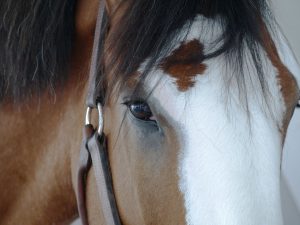
In our mini world, we would prevent cloning, if reproduction exists. NSW is culling horses for example, I completely disapprove of the method but in any fenced paddock, ocean, island etc, there is only so much food and water to go around. And those spaces are housing multiple species.
Whether some of those horses could have been moved elsewhere in the country is a question in my mind, but I digress. (I love horses).
So, when a species is particularly long-lived ie., compare a whale’s lifetime to that of our pet pup for example there will be many generations of our pet in the single whale’s lifetime. The genome records all of this. It’s rather like a library. The shelves and the books, the librarian, and the data system that keeps track of every book and where it belongs, if it needs replaced, moved etc. This library type system is in the code of the genome.
If all the women in my ancestry had a child as teenagers and all the women in your ancestry had children a decade older than that, then my library system would contain more data because there would be more people in my ancestry, when considering the many many years involved.
The data of children conceived by a woman is also in the library system so when the next child is conceived, that extra data is passed on. Meaning for example, the younger sibling has data that the older sibling doesn’t. The library system is aware of identical twins for example and their data is not identical, because they are still individuals and there library system cannot be identical due to the genomes’ design.
What is currently called ‘junk dna’ is most likely pertinent records that are historical information for the genomes library system.
Over time, this data understandably takes up space. Added to that, we are multi-cultural and different genetic backgrounds when having children together often cause large changes and this too is recorded in the library system. Less changes equates to less library space used in that sector. The sectors have influence, when a new life is conceived. The molecular librarian is reading all this data and making selections, where it can, as needed, based on that data.
In our mini world, if we want a species to survive and be long lived, we need to code for long individual lifetimes, basic form, be able to survive it’s predators, adaptability etc. If we include a super intelligent species in that mini world, that has no predator, we would need them to have compassion as well as intellect, so that they didn’t wantonly wipe out those species, among others, that sustain them, ensuring harmony and a healthy balance that supports the well being of the entire mini world and its inhabitants.
Fiona MacLeod (C)