Humpbacks – 6.46pm Monday 9th June 2025
Humpbacks – 6.46pm Monday 9th June 2025
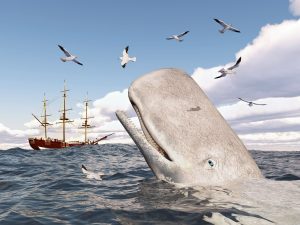
On Saturday I happened to notice a short film on YouTube – somebody had witnessed a gang of Orca attack a humpback whale, filmed it and posted it on YouTube. The word ‘takedown’ was used, so I presume the Orca did eventually kill the whale after what would have been a lengthy violent attack, and for the whale, terrifying and extreme pain. I didn’t watch it.
Yesterday (Sunday) I saw an article title suggesting humpbacks attempting to communicate with humans. I didn’t read it. But saved it for when I might do some reading.
We, as a species, have tended to first presume that if it isn’t human it’s mindless and doesn’t feel, or so it has seemed.
Until the non-human absolutely and repeatedly convinces us otherwise, it remains mindless.
Whales come up to people, in the ocean, which is a friendly gesture by a non- domesticated creature. We ourselves tend not to approach strange people. If I was in a boat, I don’t think I would approach a strange boat, they might be armed and dangerous and want to steal, traffic and so on.
Wild lions, tigers, zebras for example, don’t tend to come up to people as a friendly gesture.
Clearly, animals communicate with each other, in some form or other.
If a large family group of whales flee an area, pilot whales, sperm whales any type, because they’ve detected a group of Orca, it means the youngsters and the adults all know the threat and accordingly had to have communicated that threat. How does a youngster comprehend what that specific threat is? Because a youngster, taken by Orca, won’t survive to tell of its ordeal and suffering to others.
So we can assume communication is taking place and specifics are comprehended, due to those whales who have witnessed attacks and sharing this information.
Whales, among other creatures, don’t necessarily have a need to communicate with humans, so we can’t expect that our sudden interest means that particular creature comprehends what’s in our mind, especially when we’ve preyed upon, hunted that creature for example. It would be fair to assume that as they may be foreign to us, we are foreign to them.
Animals in the wild don’t tend to seek out communication with other creatures, yet they are aware of each other. And we should understand that, because we ourselves haven’t sought communication outside of our own species, when we lived in a wild state.
But in times of trouble, some wild animals will do the unusual and approach us, in hope of assistance.
When we come to the aid of a whale tangled in our nets, it is likely that this information is passed to members of that whales family. Whales can’t not be aware of our ships, submarines, jets etc., they must hear our activities, oil rigs. If they run from a whaling ship, then they must know that we kill. They must see our nets full of fish. They must know we can explode things. They can’t not know. Therefore, they must be able to determine which of us is safe to approach. They would hear our oohs and ohs when those of us that love them, see them.
It is extremely difficult to communicate with us, due to how we communicate, but a whale coming up to us, is a communication.
As for filming the Orca attack on the humpback, I take a very poor view of that.
To me, that was an opportunity to intervene and show our disapproval to the Orca. Filming it, showed our approval and you who filmed it, need to understand that.
If the humpback was dead or dying, that’s different. But it doesn’t take a dozen minutes of hell to kill a dying humpback in my opinion.
So in reverse, if you were in the water being mauled by frenzied Orca, who have extremely powerful, bone crushing bite strength, and I pulled out my camera to film your dozen minutes of sheer hell and you saw me filming and cheering, that’s what you would go to your death with. They didn’t help you, they filmed you and cheered.
Fiona MacLeod (C)
